
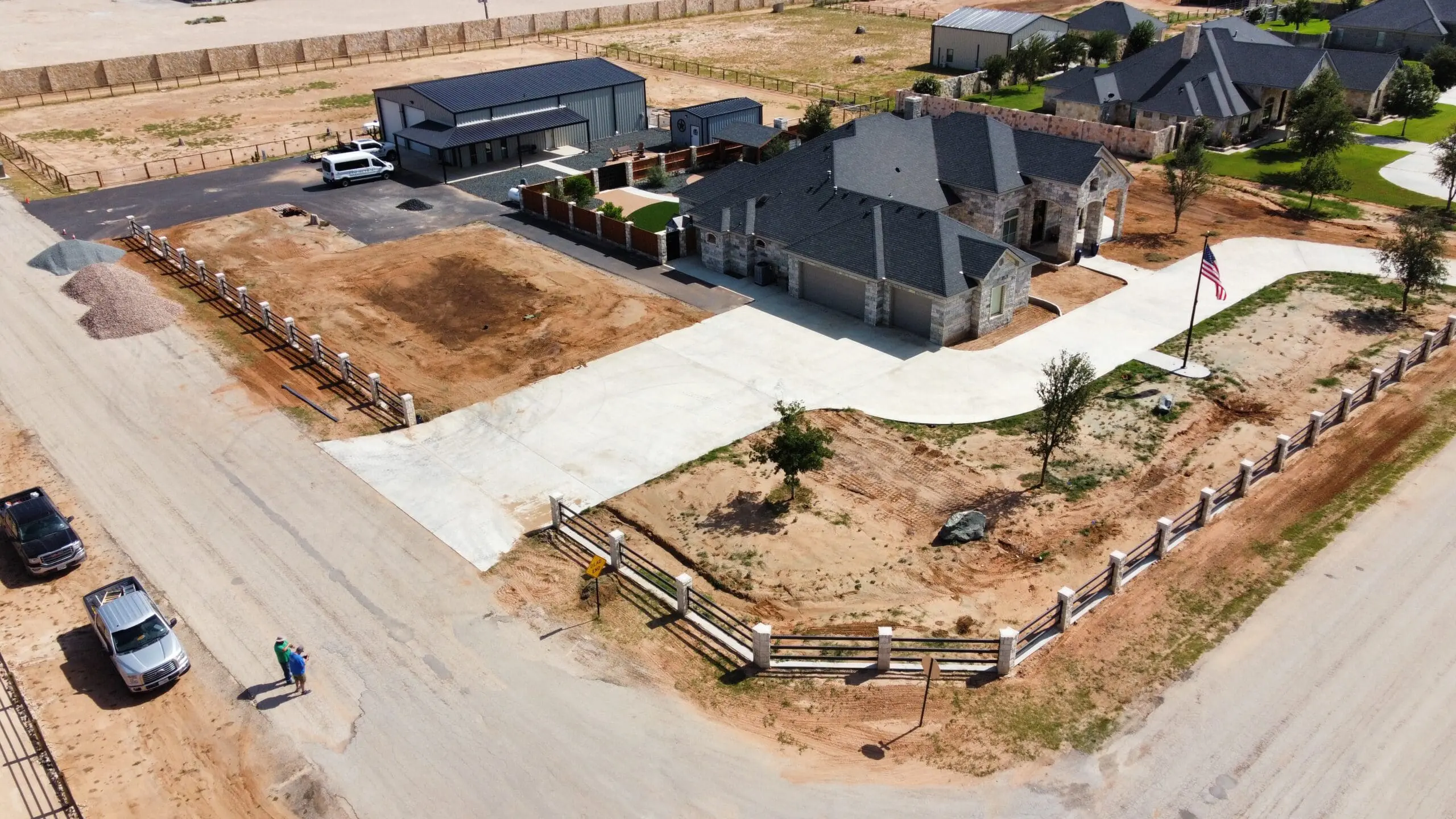
Hey neighbors — if you’ve lived in Midland/Odessa for more than five minutes, you already know our yards don’t play by the same rules as the rest of Texas. Between caliche soil, hard well water, goatheads that appear out of thin air, and that “it’s 105° but feels like the sun is sitting on your lawn” heat… it’s a lot.
So today’s a simple Q&A-style post: the most common questions we hear about landscaping, lawn care, irrigation, weed control, and even tree trimming — with straight answers you can actually use.
Q1) “Why does my grass look stressed even when I’m watering?”
In West Texas, “watering more” isn’t always the fix — it can actually make things worse.
Common culprits:
- Caliche soil: Water can’t soak in evenly, so it runs off or puddles.
- Hard well water: Mineral buildup can reduce sprinkler performance and clog drip emitters.
- Wrong schedule: Short, frequent watering trains shallow roots (then summer heat wipes them out).
What to do:
- Water deeper and less often so roots chase moisture.
- Check for runoff — if you see water moving across the surface, you need shorter cycles with soak time in between.
- Consider a quick irrigation tune-up (no fancy stuff — just making sure your system is doing what you think it’s doing).
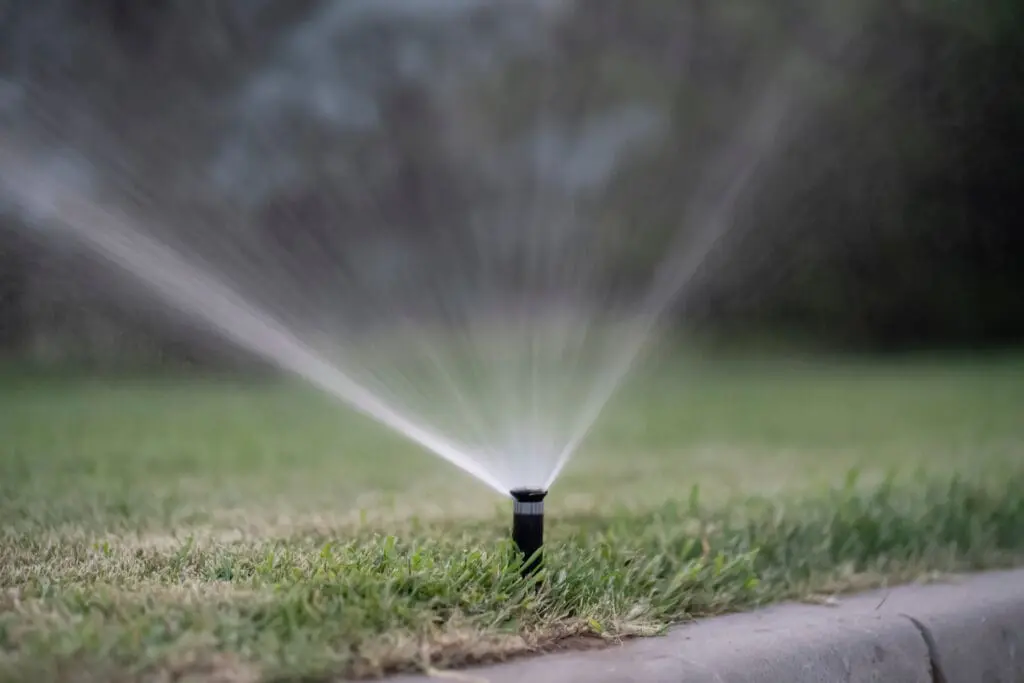
Q2) “How often should I run my irrigation in summer?”
There’s no one-size-fits-all schedule, but here’s a practical starting point for Midland/Odessa:
- Lawns: 2–4 days/week in peak heat, with longer run times (adjust for soil and sun exposure).
- Flowerbeds and shrubs: Drip is usually best; 2–3 days/week depending on plant type.
- Trees: Deep watering less often is the name of the game.
Big note: if you’re on well water, keep an eye out for mineral buildup and clogged nozzles. Your lawn might be “scheduled,” but the water may not be landing where it needs to.
Q3) “Is drip irrigation really better than sprinklers?”
For beds, shrubs, and many landscape design layouts — yes, drip is usually the smarter choice here.
Why drip works well in West Texas:
- Delivers water right to the root zone (less wasted to wind/evaporation)
- Helps prevent overwatering areas that don’t need it
- Makes it easier to separate plants by water needs (super important when you’re mixing natives with ornamentals)
Spray heads still have their place for turf areas — but beds and trees often do better with drip or bubblers.
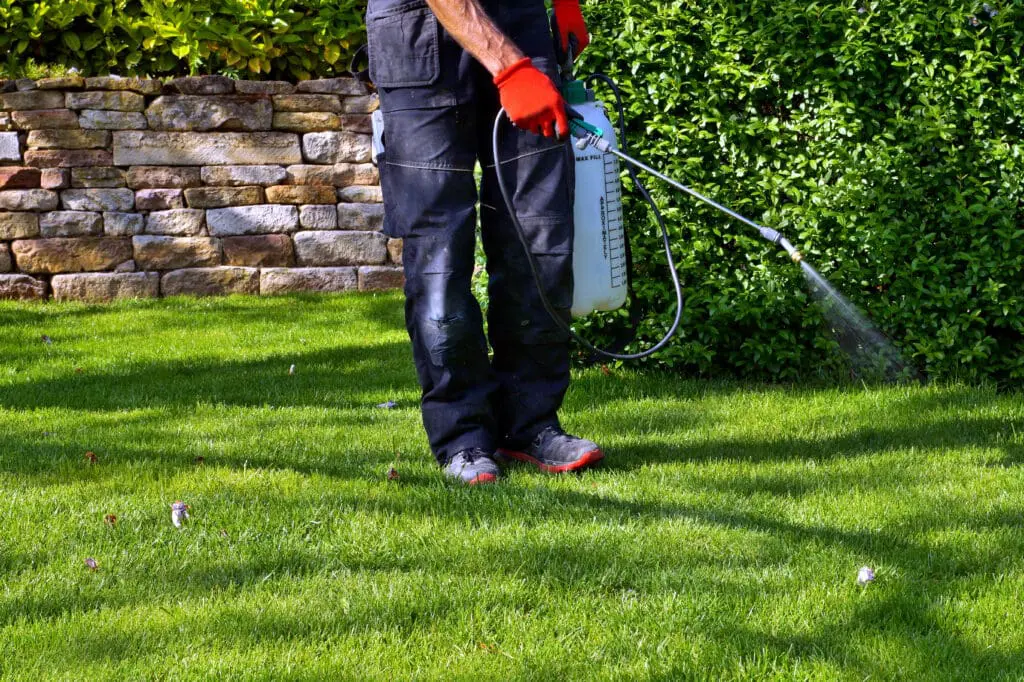
Q4) “What’s the fastest way to get rid of goatheads and other weeds?”
Let’s be real for a second: goatheads are basically a West Texas hobby we didn’t sign up for.
The fastest path is a combo approach:
- Pre-emergent at the right time (this is the big one)
- Targeted weed control for what’s already up
- Healthy turf/bed coverage so weeds don’t have open space to move in
If you’re constantly battling weeds, it’s usually because the yard has thin spots, poor soil conditions, or inconsistent watering — and weeds love that.
Q5) “Do I really need fertilization, or is that just ‘extra’?”
In our climate, fertilization isn’t about making your lawn neon green. It’s about helping it survive stress.
A good lawn care plan typically supports:
- Root development (so grass can handle heat)
- Recovery after mowing and foot traffic
- Better density (which helps with weed control)
The key is right product, right timing, right rate. Overdoing it can burn turf — especially when temperatures are high.
Q6) “When should I schedule tree trimming?”
Tree trimming is one of those things that’s either preventative… or it becomes an emergency.
Good reasons to schedule tree trimming:
- Deadwood removal (especially before storm season)
- Clearance from roofs, power lines, and driveways
- Reducing weight on long limbs
- Improving structure so the tree handles wind better
In West Texas, we also see stress cracks and limb failure after heat waves or sudden freezes. If something looks off, it’s worth getting it evaluated.
Q7) “Why do my new plants keep dying?”
Most plant failures around here come down to one of these:
- Wrong plant for the location (full sun here is no joke)
- Mixed water needs in the same zone
- Poor soil prep (caliche + compaction = roots can’t breathe)
- Overwatering “to be safe” (which can rot roots)
If you’re investing in a new landscape design, the best money you can spend is on proper planning: plant selection, bed layout, irrigation zoning, and soil prep. That’s how you get a landscape that thrives — not just survives.
Q8) “What’s the first thing you check when a yard just isn’t improving?”
We start with the basics:
- Irrigation coverage and pressure (are you actually watering evenly?)
- Soil conditions (caliche depth, compaction, drainage)
- Weed pressure (what weeds, where, and why)
- Mowing habits (too short is a common problem)
A lot of the time, one or two small changes make a huge difference.
Need a second set of eyes? We’ll keep it simple.
Eternal Tree & Landscape has been doing landscaping, lawn care, irrigation, weed control, and tree trimming in Midland/Odessa for 30+ years — and we’re proud to be Best of the Basin (2024 & 2025).
If you want help dialing in your yard (without guesswork), check us out at https://www.etlmidland.com and book your free lawn analysis. Or call 432-689-8186
Recent Comments