
Midland & Odessa
If your trees in Midland or Odessa look stressed even though you’re watering them regularly, the problem might not be drought, bugs, or poor soil. It could be the water itself—specifically, salt stress from well water.
Many homes across the Permian Basin rely on well water, and while it’s a practical choice, it often carries high levels of salt and sodium. Over time, these salts build up in the soil and create a condition called salt stress (or soil salinity). This is one of the most common — and most overlooked — reasons trees and landscapes struggle in West Texas.
At Eternal Tree & Landscape, we see this issue frequently during tree health assessments. The good news? Once you understand what’s happening, there are effective ways to help your trees recover and protect your landscape long-term.
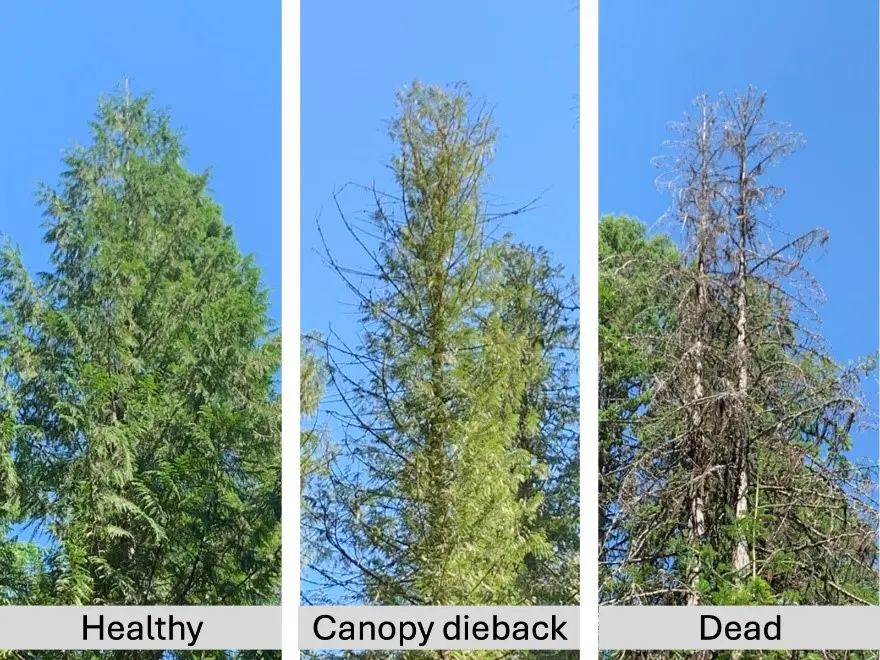
Healthy tree (left) vs. stressed and declining tree (right) — a common sight when salt stress goes untreated.
Why Well Water Causes Problems in the Permian Basin
Our arid climate makes the issue worse. With low rainfall and high evaporation, salts don’t get flushed out naturally like they would in wetter regions. Instead, they concentrate in the root zone.
Here’s what happens:
- Sodium builds up and damages soil structure, leading to compaction and poor drainage.
- High salt levels create osmotic stress — plants literally can’t pull water out of the soil even when it’s moist.
- Toxic ions (sodium and chloride) damage roots and interfere with nutrient uptake.
- Over time, this weakens trees, making them more susceptible to pests, disease, and heat stress.
Common trees we see affected include Fruitless Mulberry, certain oaks, elms, and other landscape favorites that aren’t naturally salt-tolerant.
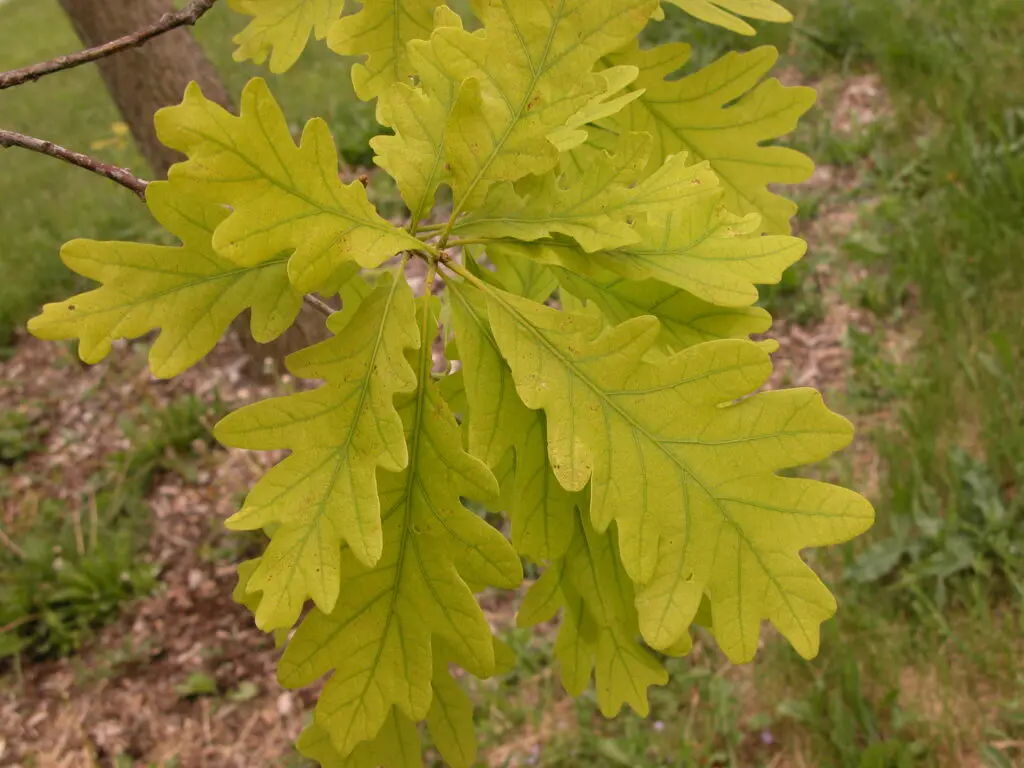
Interveinal chlorosis (yellowing between the veins) is one of the classic signs of salt or nutrient stress in trees.
Signs Your Trees May Be Suffering from Salt Stress
Watch for these symptoms, especially on properties using well water:
- Yellowing leaves with green veins remaining (interveinal chlorosis)
- Browning or “burned” leaf edges (marginal necrosis)
- Wilting or drooping even when the soil feels moist
- Stunted new growth or smaller-than-normal leaves
- Premature leaf drop, especially in summer
- Hard, compacted soil that doesn’t absorb water well
- Overall thinning canopy or dieback starting from the top or outer branches
If several of these signs appear together on multiple trees or plants, salt stress is very likely a contributing factor.
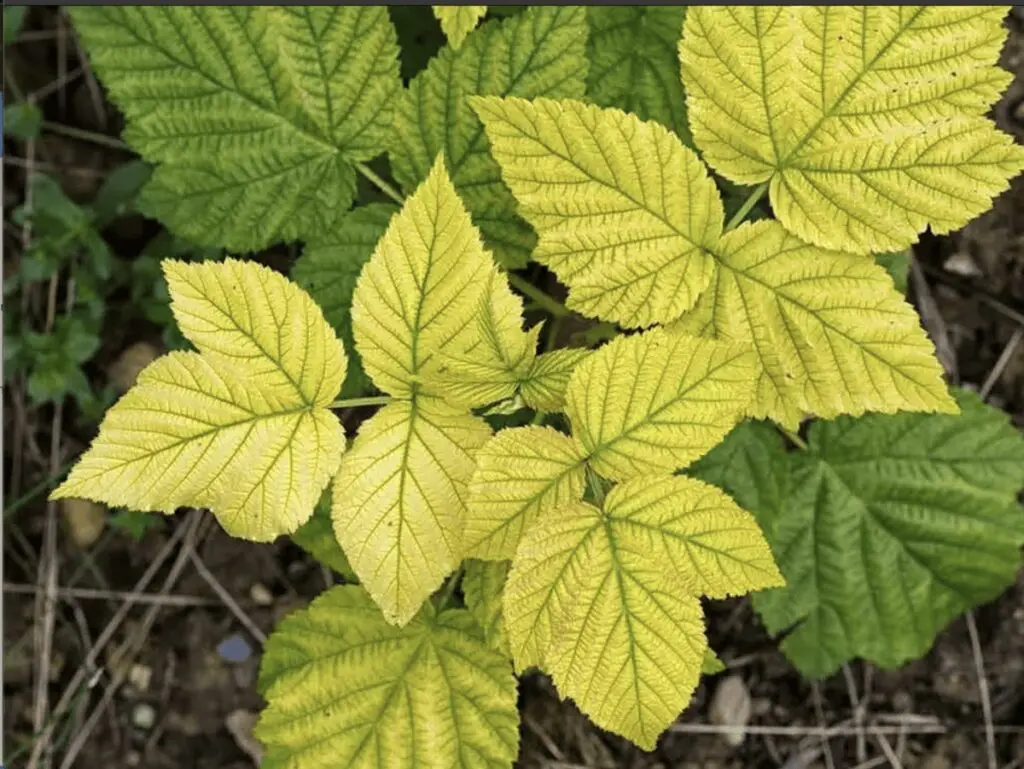
Yellowing leaves with green veins — a frequent symptom we diagnose during tree health assessments in Midland and Odessa.
How to Confirm Salt Stress Is the Problem
The only reliable way to know for sure is through testing. During a professional tree health assessment, we evaluate:
- Soil salinity (electrical conductivity)
- Sodium levels and soil structure
- Irrigation water quality
- Root health and overall tree condition
Many homeowners are surprised to learn their well water has significantly higher salt levels than city water. Testing takes the guesswork out and helps us create a targeted recovery plan.
How to Treat and Reverse Salt Stress
The goal is to reduce salt levels in the root zone, improve soil structure, and support the tree’s recovery. Here are the most effective approaches we use and recommend:
1. Deep Root Watering / Leaching
Applying larger volumes of lower-salt water slowly and deeply helps flush excess salts below the root zone. This is often done with specialized equipment for best results.
2. Gypsum Applications
Gypsum (calcium sulfate) is one of the best tools for salt remediation. It helps displace sodium in the soil, improves structure, and enhances drainage without raising pH. We typically recommend applications in spring and/or fall.
3. Aeration and Soil Amendments
Breaking up compacted soil allows better water movement and air exchange. We may also recommend organic matter or other amendments based on soil test results.
4. Irrigation System Evaluation & Upgrades
Poor irrigation timing or high-salt water application can make the problem worse. We often help clients optimize or convert systems (for example, improving drip irrigation or adjusting schedules) to reduce stress.
5. Long-Term Plant & Design Choices
For new plantings or renovations, we recommend more salt-tolerant species and proper soil preparation from the start.
Soil amendments like gypsum are a key part of reversing salt damage in West Texas landscapes.
Prevention Tips for Well-Water Properties
- Test your irrigation water quality periodically.
- Avoid overwatering — consistent, deep, infrequent watering is better.
- Mulch properly to reduce evaporation and moderate soil temperature.
- Choose salt-tolerant plants when adding new trees or shrubs.
- Consider a professional irrigation audit if your system is older.
Don’t Wait Until It’s Too Late
Salt stress is progressive. The longer it goes untreated, the more damage occurs to roots and overall tree health. Early intervention gives your trees the best chance of full recovery.
If you’re noticing yellowing, wilting, or declining trees on your Midland, Odessa, or Permian Basin property, we can help.
Schedule a professional tree health assessment with our ISA Certified Arborist. We’ll evaluate the situation on-site, explain what we find, and give you a clear plan — including whether salt stress from well water is playing a role.
Call us today at (432) 689-8186
Or visit www.etlmidland.com to request an assessment.
We proudly serve Midland, Odessa, and the entire Permian Basin with expert tree care, irrigation solutions, and landscaping services tailored to West Texas conditions.
Recent Comments