
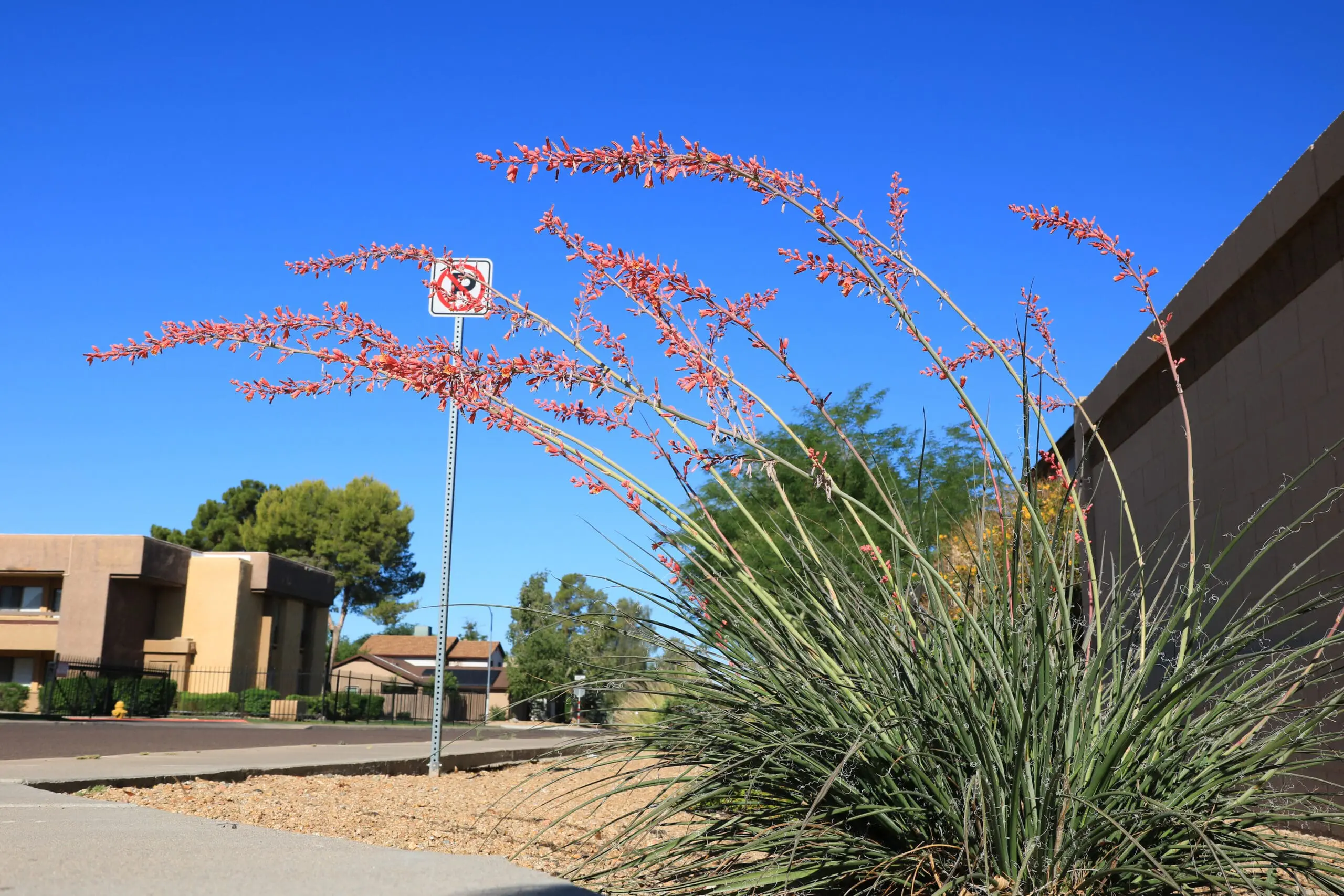
Hey neighbors—if you’ve ever planted something in Midland or Odessa and watched it struggle the minute summer hits, you already know the truth: West Texas landscaping isn’t for the faint of heart. If you're searching for a tough, beautiful option, consider red yucca in Midland, Texas, as these plants can handle caliche soil, hard well water, random late freezes, and that “is the sun closer this year?” kind of heat, so you need plants that can take a beating and still look good.
Today’s spotlight is one of our all-time favorites for desert-climate landscape design: Red Yucca (Hesperaloe parviflora). It’s not a true yucca, but it has that same bold, architectural look—plus it blooms frequently and doesn’t demand constant irrigation.
Why Red Yucca Works So Well Here
Red yucca checks the boxes for what we want in West Texas landscaping:
- Heat tolerant: It thrives in extreme heat and full sun.
- Drought tolerant: Once established, it needs surprisingly little water.
- Hard water friendly: It handles mineral-heavy well water better than many “pretty” plants.
- Low maintenance: Minimal pruning, minimal fuss.
- Pollinator magnet: Hummingbirds love those coral-red flower spikes.
If you’re trying to build a landscape that looks sharp without turning your irrigation system into a full-time job, red yucca is a smart move.
Where to Use Red Yucca in Your Landscape Design
Red yucca is versatile, which is why we use it often in both residential and commercial landscape design projects.
Here are a few practical placement ideas:
- Entryway accents: Plant in pairs near a front walkway or driveway entrance for a clean, welcoming look.
- Xeriscape beds: Mix with gravel, boulders, and other desert-adapted plants for a modern West Texas vibe.
- Along fences or walls: It softens long, flat lines and adds color without needing much shade.
- Commercial landscaping: Great for office buildings and storefronts because it stays tidy and doesn’t require constant lawn care attention.
Pro tip: Give it space. Red yucca looks best when it’s not crowded by high-water plants that need frequent irrigation.
Caliche Soil Reality: How to Plant It So It Actually Thrives
Let’s be real for a second—caliche soil is basically nature’s concrete. If you plant red yucca the “normal” way, it might survive, but it won’t thrive.
Here’s how we recommend planting in Midland/Odessa conditions:
- Dig wider than you think: Aim for a hole about 2–3x the width of the root ball.
- Break up the caliche: If you hit a hard layer, bust it up so roots can expand.
- Improve drainage (don’t overdo the compost): A little organic matter helps, but red yucca hates soggy roots. Too much rich soil can hold water and cause rot.
- Plant slightly high: Setting the root ball a bit above grade helps prevent water from pooling.
Good drainage is the difference between a plant that looks “okay” and one that looks like a showpiece.
Watering + Irrigation: Less Is More (After Establishment)
Red yucca is drought resistant, but it still needs a solid start.
First 4–6 weeks:
- Water deeply 1–2 times per week (depending on heat and soil).
After establishment:
- Water every 10–14 days in summer (sometimes less), and much less in cooler months.
If you’re using irrigation, red yucca does best on:
- Drip irrigation (ideal for targeted watering)
- Or a bubbler set low and infrequent
Avoid frequent spray watering. That’s a quick way to waste water and invite problems—especially with hard well water and mineral buildup.
Maintenance: What to Do (and What Not to Do)
Red yucca is low maintenance, but a little cleanup goes a long way.
Do this:
- Remove old flower stalks once they dry out.
- Trim dead or damaged leaves near the base.
Don’t do this:
- Don’t “haircut” it like a shrub. That ruins the natural form.
- Don’t overwater. Overwatering is the #1 way people accidentally kill drought-tolerant plants.
And if goatheads are taking over the bed around it, that’s where consistent weed control matters. A clean, maintained bed makes red yucca look ten times better.
Pairing Ideas (So It Looks Intentional)
Want it to look like a designed landscape—not just “a plant stuck in the ground”? Try pairing red yucca with:
- Lantana
- Salvia or sages
- Decorative grasses or Spanish Dagger Yuccas
- Local stone, gravel, and boulders
This kind of combo gives you color, texture, and structure—without signing up for high-maintenance lawn care in areas where grass struggles.
Need Help Choosing the Right Plants (and Keeping Them Alive)?
At Eternal Tree & Landscape, we’ve been doing West Texas landscaping for 30+ years, and we’ve seen what works—and what melts, dies, or turns into a crispy mess by July.
We’re also proud to be voted Midland’s Best of the Basin Landscape Company (2024 & 2025). Whether you need full landscape design, irrigation improvements, weed control, lawn care, or even tree trimming to clean up your property, we’ll help you build something that looks great and makes sense for our climate.
Learn more at https://www.etlmidland.com .
Recent Comments