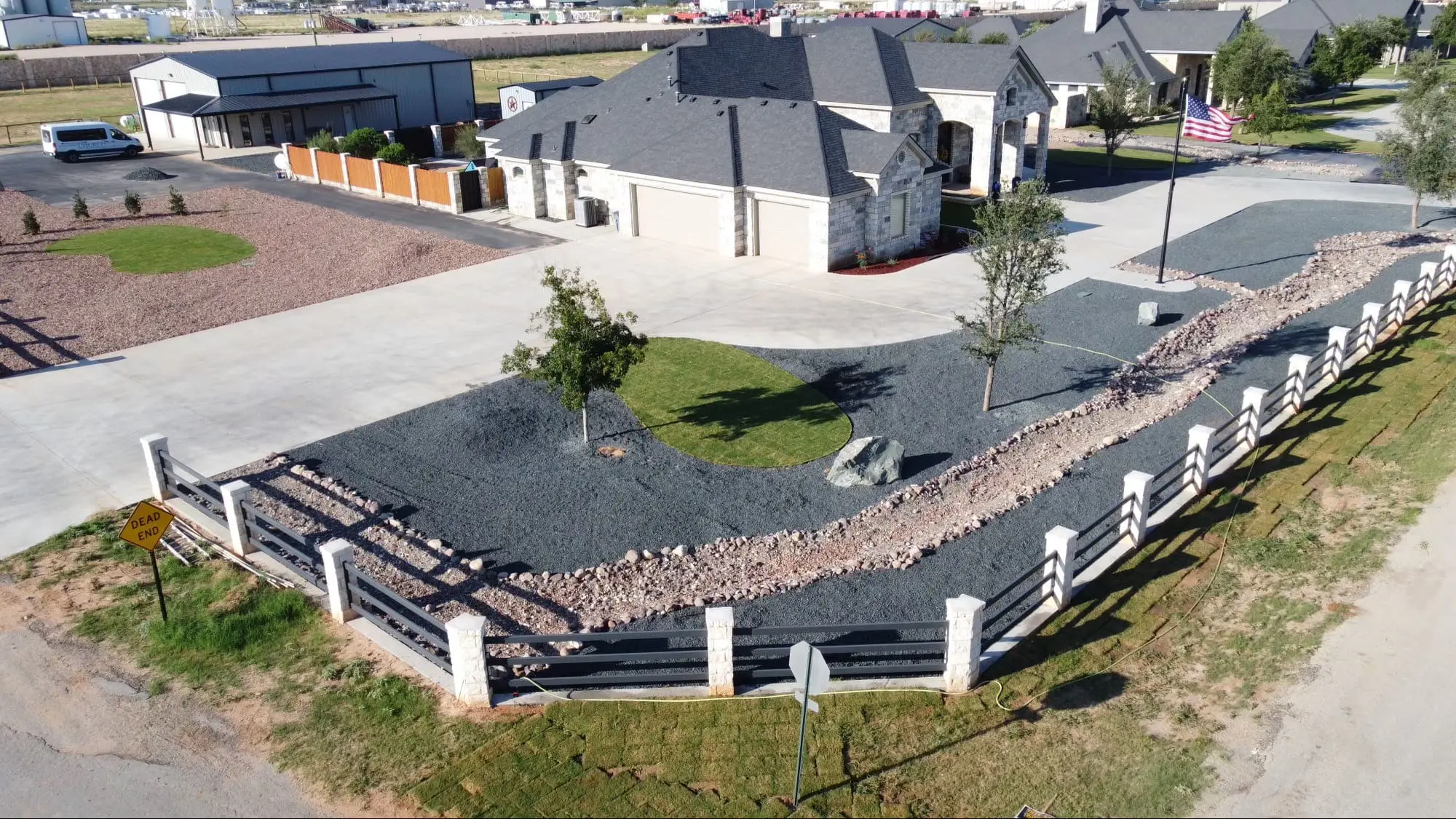
We can usually tell how a Midland or Odessa yard is going to struggle before we even get out of the truck. Not because we’re guessing. Because the same West Texas landscaping mistakes show up over and over: plants mixed on one irrigation zone, a tree dropped in a hole punched through caliche, sprinklers running at 9 p.m. in July, goatheads already setting seed in the parkway.
West Texas is not a gentle climate. Caliche doesn’t care about your shovel. Well water leaves mineral crust on everything it touches. A new plant can cook in a weekend if the soil and water aren’t right. And goatheads will find the one bare spot you meant to deal with “next week.”
Most of that is preventable. These are the West Texas landscaping mistakes we see the most — and what actually works instead.
1. Mixing plants that don’t want the same water
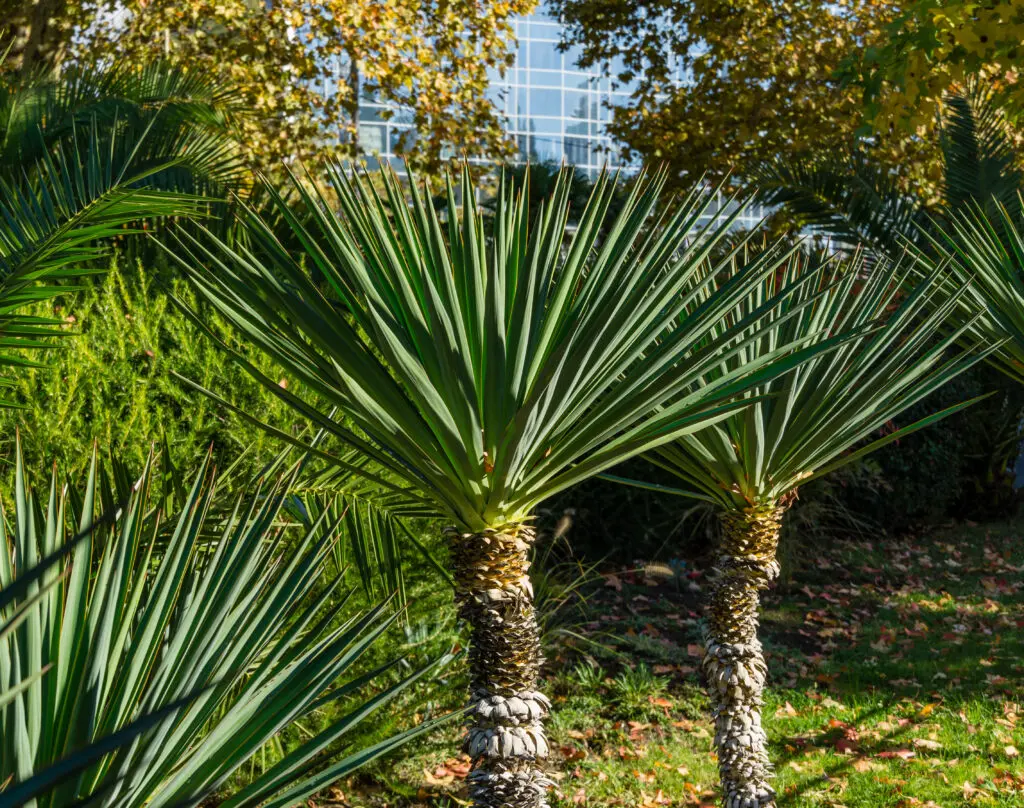
This is the big one in landscape design. A Bermuda lawn that wants a deep soak sitting next to Texas sage or red yucca that would rather stay on the dry side — all on the same valve. The lawn looks thirsty. The “drought-tolerant” plants rot. Then people turn the clock up and make both problems worse.
Group plants by water need first: low, medium, high. Build the irrigation zones around that, not around how the beds look on paper. Drip for shrubs and flower beds. Sprays or rotors for turf. If you’re reworking a yard, sketch the zones before you pick plants. Pretty comes after the water plan, not before it.
2. Planting into caliche like it’s regular dirt
Caliche is not soil with an attitude. It’s a hard layer that stops roots and keeps water from soaking in evenly. We see trees that have been in the ground three years and still have a root ball the size of the original pot because nobody broke that layer up.
You have to open it. Break the caliche in the planting area, amend with compost so the soil can actually hold and move water, and go wider than you think. Tree and shrub roots spread out more than they go down. A deep, skinny hole in West Texas is a slow way to lose a plant.
3. West Texas Landscaping: Should You Water More?
Heat makes people nervous, so they add days, add minutes, or run the system at night. That’s how you get fungus, shallow roots, and a water bill that doesn’t match how the yard looks.
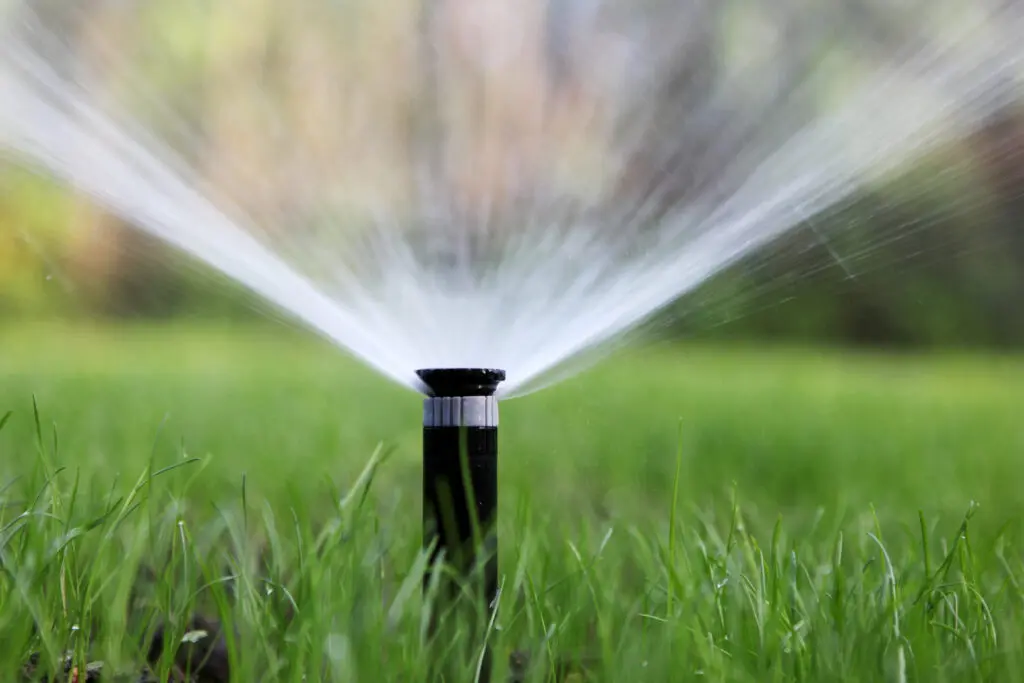
Water early morning so the grass can dry during the day. Water deeper and less often so roots go looking for moisture instead of living in the top two inches. And change the schedule with the season. A July program in September is one of the fastest ways to waste water and stress a lawn that should be easing off.
4. Ignoring what hard well water does to your West Texas Landscape
If you’ve got well water, mineral buildup is not a maybe. It clogs drip emitters, throws sprinkler patterns off, and creates those “I swear this zone is running” dry patches. The plant looks sick. The real problem is the head or the emitter.
Check emitters and filters on a regular schedule. Flush lines when coverage starts looking uneven. If you’ve got sand or grit in the water, a sediment filter at the inlet saves a lot of headaches. Brown spots after you’ve been watering are often an irrigation problem, not a fertilizer problem.
5. Waiting on weeds until goatheads own the yard
Goatheads do not wait for a convenient Saturday. Once they’re established, you’re pulling stickers out of shoes, tires, and dog paws for the rest of the season.
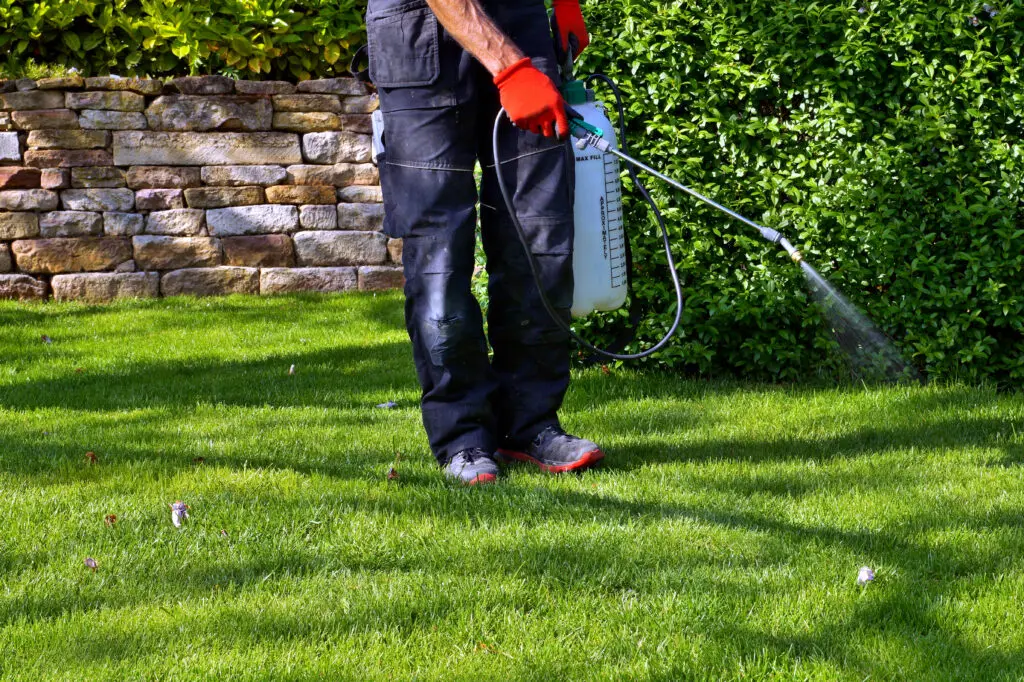
Start early and stay on it. Thick, healthy turf is still the best defense we’ve got. In beds, mulch cuts weed pressure and helps hold moisture so you’re not watering as much. A consistent weed plan will clean up a yard faster than a full redesign in a lot of cases.
6. Skipping tree work until a limb is on the roof
Tree trimming out here is not just curb appeal. Wind, heat, and a surprise freeze will find the weak wood. Poor pruning makes it worse — especially topping. That flush of weak sprouts looks “cut back” for a year and then becomes a structural mess.
Prune on a schedule that matches the tree, not the moment it scares you. Take out deadwood and crossing branches before storm season. If you’re not sure what a Live Oak or a stressed pecan actually needs, that’s arborist work. Guessing with a chainsaw is how trees get shortened and then decline.
7. West Texas Landscaping: Don't Treat Your yard like a one-and-done project
A landscape in Midland is not a kitchen remodel. You don’t install it and walk away. Heat, wind, caliche, and water quality keep moving the goalposts. The yards that stay sharp are the ones that get seasonal adjustments: watering changes, fertilization timed for our climate, irrigation checks a few times a year, and somebody noticing pest or salt-stress symptoms before half the bed is gone.
That’s the unglamorous part. It’s also the part that keeps you from paying twice.
If you want it done right for this West Texas Landscaping climate, call today!
We’ve been working Midland, Odessa, and West Texas properties for 30+ years. We’re an ISA Certified Arborist, a TCEQ licensed irrigator, and a TDA licensed applicator — which matters when the issue is a tree, a well-water system, or a weed that laughs at a big-box spray. Best of the Basin in 2024 and 2025 didn’t come from planting the same stuff that works in Dallas.
If the yard is fighting you, we’ll come look at it and tell you what’s actually going on.
Current offer: 20% off your first 3 months, plus a free lawn analysis. Call (432) 689-8186 or request a visit at etlmidland.com.
Recent Comments