
Hey there, Midland and Odessa neighbors—this is Ty from Eternal Tree & Landscape. After almost a decade keeping yards alive in 100° heat, caliche soil, and those random freezes, I’ve seen just about every tree we have around here, including the most common trees in the Permian Basin. As an ISA Certified Arborist I can help you with everything from planting to plant health care, and if need be a safe removal and replanting. Today I want to help you recognize the seven trees you probably see (or have) every day—and the red flags that tell you it’s time to call someone who knows West Texas trees inside and out.
Knowing these signs early can save you thousands in removal costs and keep your family safe from falling limbs.
1. Mesquite (Prosopis glandulosa) – The Tough Survivor
Native to our area and basically bulletproof. Deep roots, thorny branches, and that classic West Texas look.
Warning signs it needs help:
- Large dead sections in the canopy (mesquite rarely drops big branches unless it’s in trouble)
- Oozing black sap from the trunk (borer damage)
- Thinning foliage during summer when it should be full
DIY limit: Light pruning of small branches only. Anything over 10 ft or near power lines—call us.
2. Pecan (Carya illinoinensis) – West Texas Shade King
Big, beautiful shade and nuts—if it’s happy.
Common Trees in the Permian Basin problems:
- Zinc deficiency (shows as yellow, wavy leaves with green veins)
- Cotton root rot in poorly drained spots
- Storm breakage because homeowners rarely thin them properly
Look for dieback starting at the top. That’s usually a sign the tree is fighting hard and losing.
3. Desert Willow (Chilopsis linearis) – Low-Water Beauty
Trumpet flowers all summer and loves our heat.
Red flags:
- Sudden leaf drop in July/August (usually overwatering + root rot)
- Cankers or sunken areas on branches
- Powdery mildew after rare humid spells
Great tree, but it hates “wet feet.” If yours looks sad after a big rain, drainage is the culprit.
4. Chinese Tallow (Triadica sebifera) – The Invasive Popcorn Tree
Pretty fall color… and unfortunately on the Texas invasive list for good reason.
Why it’s a problem child:
- Seeds everywhere
- Weak wood that splits in wind
- Shallow roots that heave sidewalks
If you have one, consider phased removal and replacement with a native. We do that a lot around here.
5. Afghan (Eldarica) Pine – Our Go-To Windbreak
Fast-growing evergreen that actually survives our winters.
Watch for:
- Browning needles from the bottom up (Tip moth or pine bark beetles)
- Pitch tubes (little popcorn-looking globs on the bark)
- Needles turning yellow in summer (usually underwatering)
Once beetles move in, the clock is ticking—sometimes only weeks.
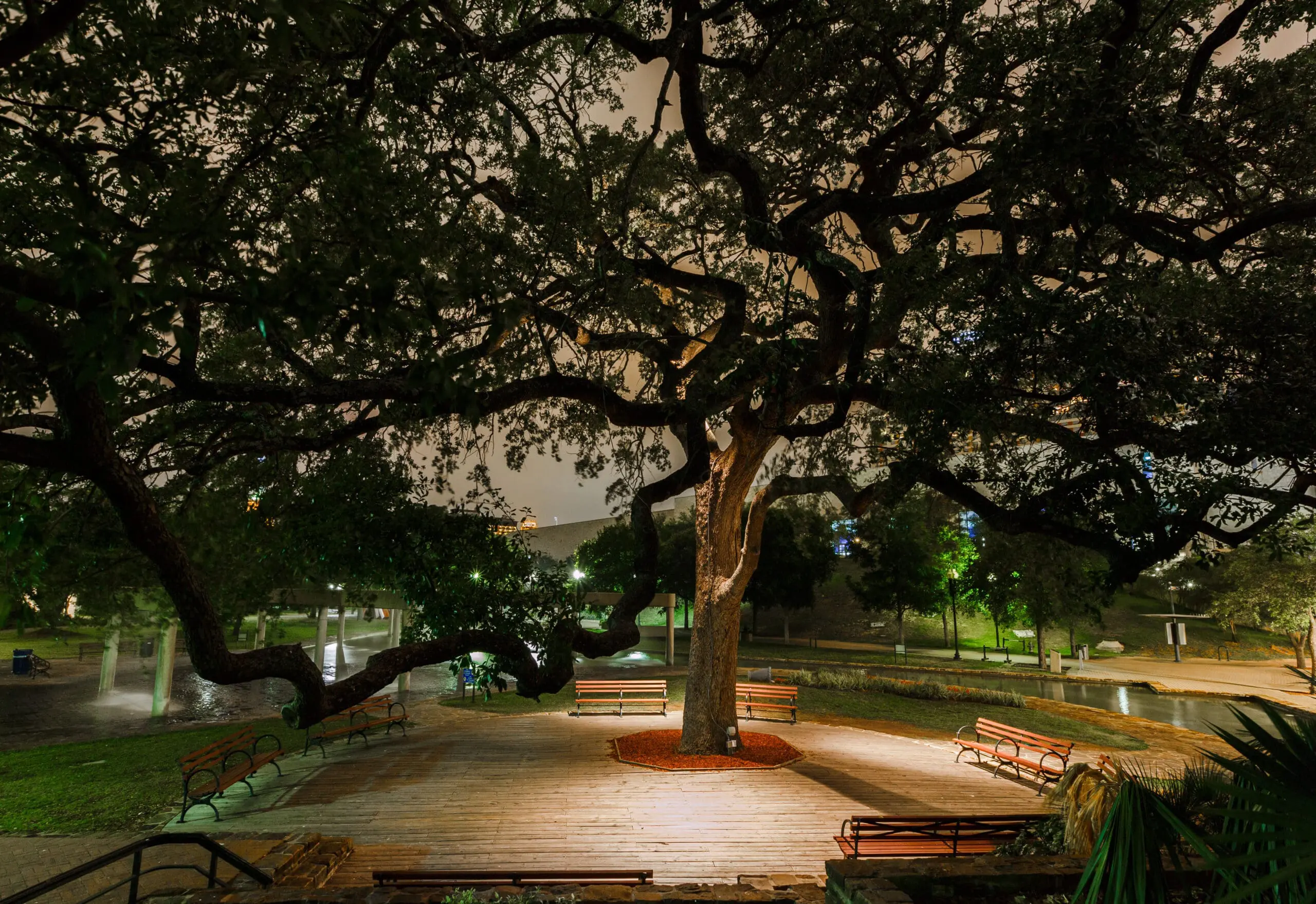
6. Live Oak (Quercus virginiana) – The Coastal Transplant
People love planting these for the classic oak look, but our alkaline soil stresses them.
Signs of trouble:
- Oak wilt (vein browning in leaves—fatal and spreads fast)
- Hypoxylon canker (gray bark peeling off)
- Thinning crown with epicormic sprouts (little shoots all over the trunk)
Oak wilt is the scariest thing we deal with in Midland/Odessa. Early detection is everything.
7. Texas Elm (Ulmus pumila) – The Fast but Fragile One
Grows like a weed, breaks like a matchstick.
Typical issues:
- Branches snapping in 30 mph winds (normal here)
- Dutch elm disease (less common now but still around)
- Tons of volunteer seedlings
Great for quick shade, terrible for long-term safety. Most of the emergency calls we get after storms involve Siberian elms.
Final Thoughts on Common Trees in the Permian Basin from Your Local Tree Guy
Walk your yard this weekend. Look up. If you see more than a couple of these warning signs on any tree, it’s worth getting a professional opinion before the next wind event or freeze.
Healthy trees raise your property value, drop your cooling bills, and make West Texas feel a little less brutal in July. Let’s keep them that way.
Got a tree you’re worried about? Drop a comment below or give us a call at 432-689-8186. Happy to take a look!
— Ty Eternal Tree & Landscape Serving Midland, Odessa, and the Permian Basin since 2016
Recent Comments